Hardware & operating system
- Quad-core AMD or ARM processor.
- At least 32 GB RAM; 64 GB recommended.
- SSD storage of 1 TB or more.
- Ubuntu 24.04.
- Separate server or virtual machine preferred over a shared partition.

HERITAGE ALLIANCE · DATA & KNOWLEDGE
Source reference requirements for a participating local node. Confirm capacity, security and operational needs with the responsible institution before deployment.
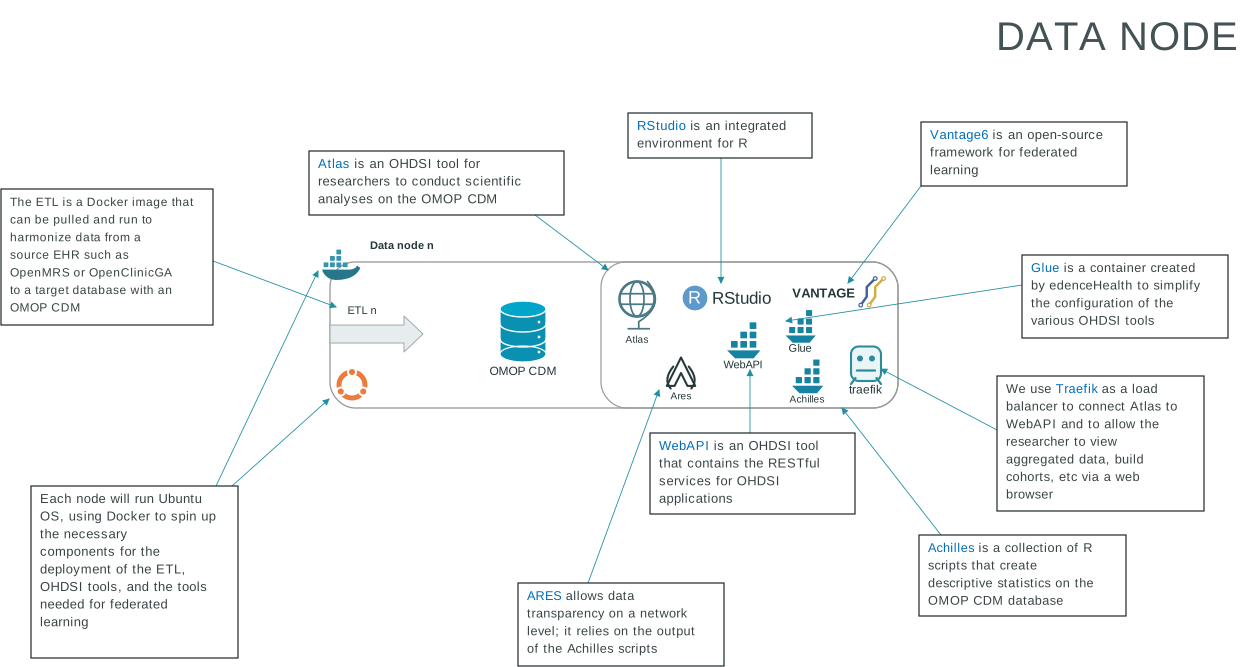
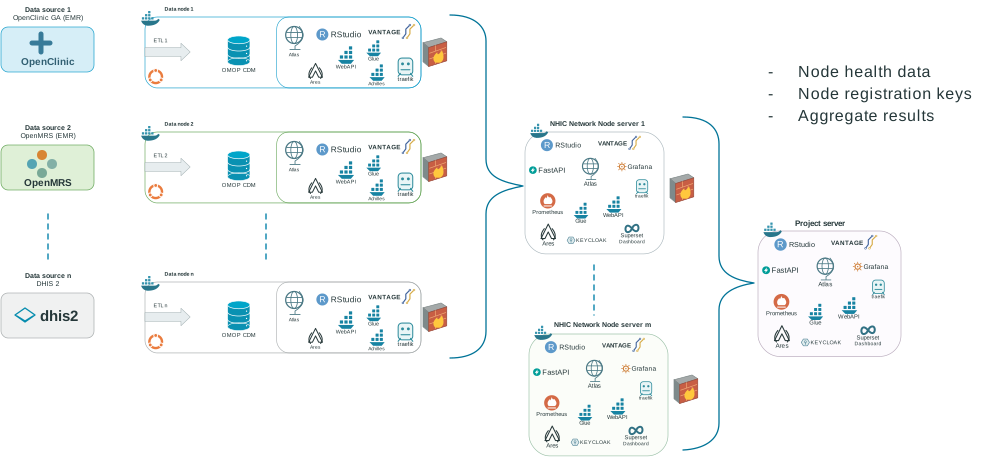
The source combines local data nodes with coordinating network services. Individual-level records remain subject to the source institution’s controls; approved queries and outputs require governance review.
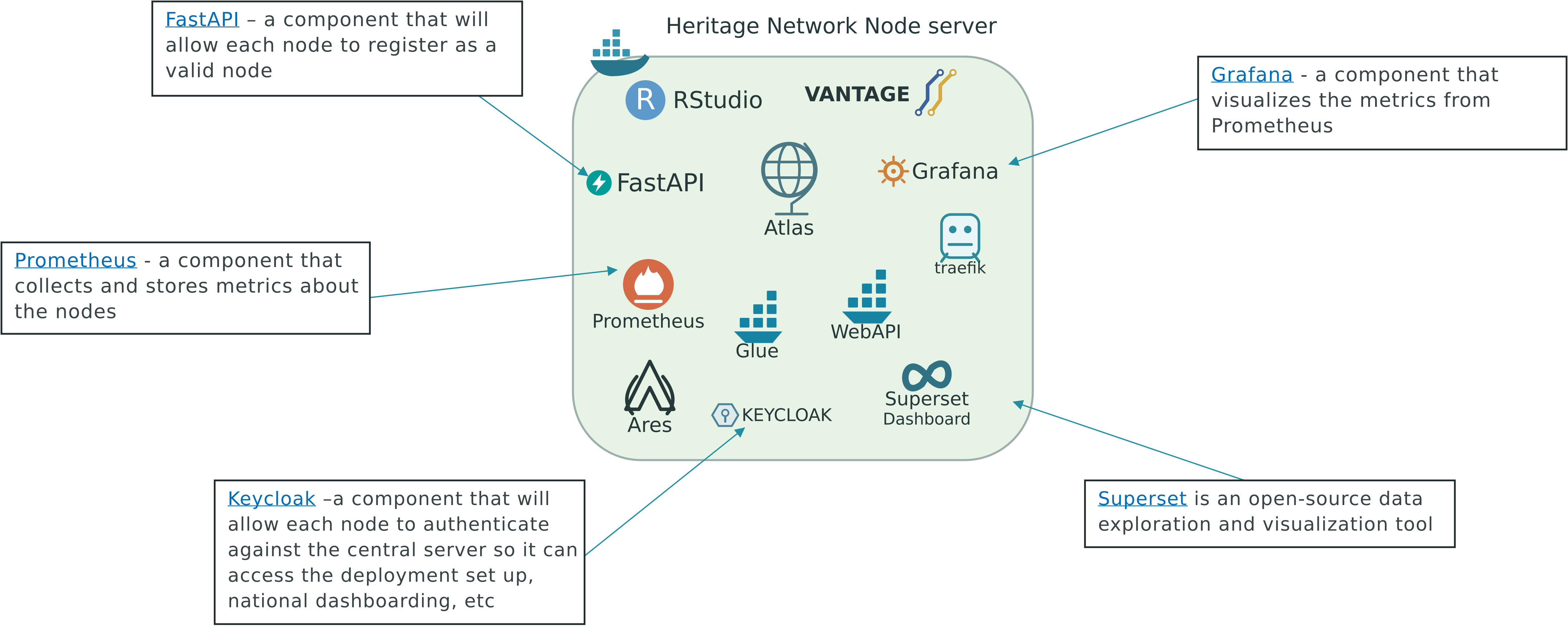
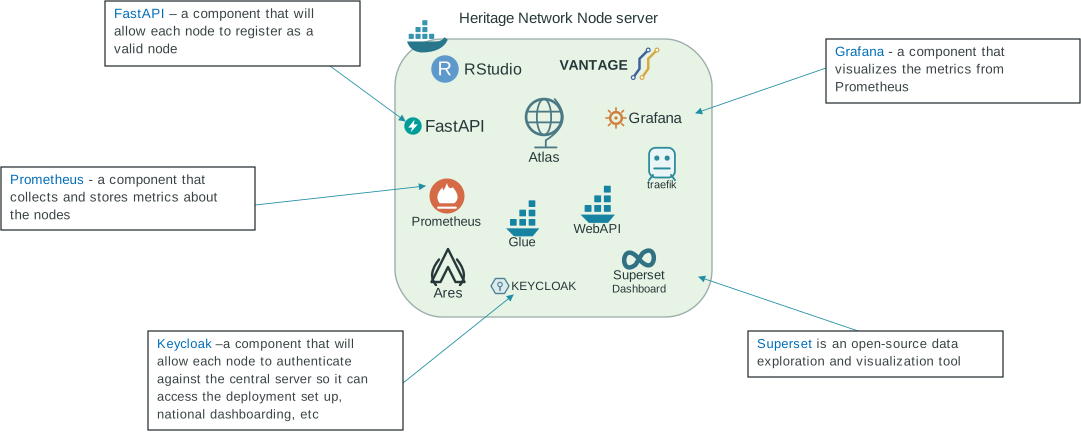
A grouped service environment for node registration, authentication, metrics and research tools. Callout leaders explain components; they do not introduce additional service dependencies.
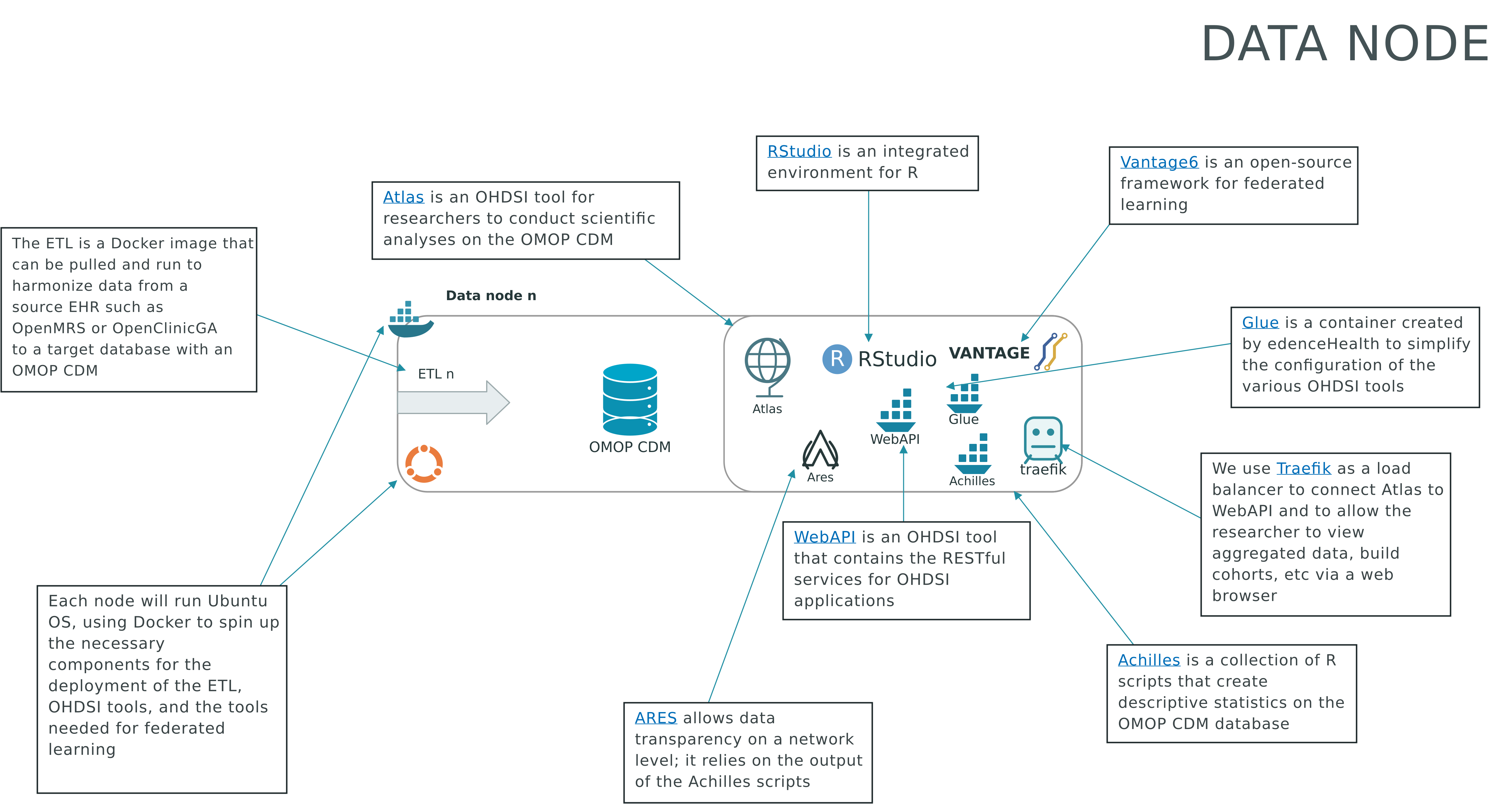
Local ETL maps source information to OMOP CDM. Docker-hosted OHDSI components and federated learning tools surround the database in the source design.
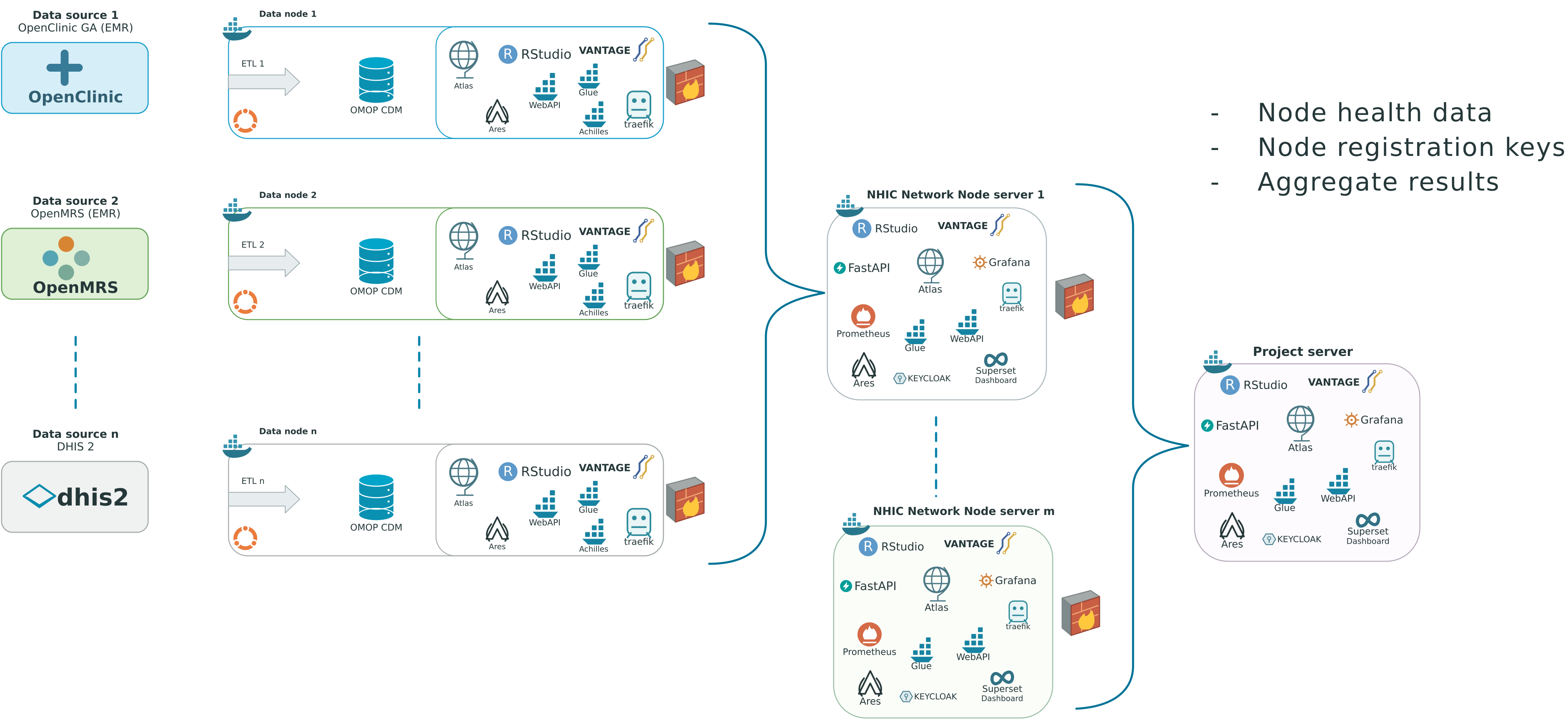
Representative EMR systems and local nodes are grouped with NHIC network servers and the project server. No country labels occur in the source technical diagrams.
Institutions control their own data environment and permissions.
Docker groups reproducible software components for deployment.
The reference hub coordinates participating nodes and approved aggregate exchange.
Analytical tools support research questions and modelling where approved and validated.
Data originates in an authorised clinical, laboratory, surveillance or survey system.
Local transformations map data into an OMOP CDM structure.
Authorised analyses run under local controls; approved aggregate results may be shared.
Research teams interpret outputs, assess disclosure risk and review findings before release.
Capabilities described by the source design include timely evidence, impact modelling, federated queries, privacy-preserving research and a web portal. Heritage deployment and validation of each capability must be confirmed separately.
Docker, R, Python, Jupyter, OHDSI/ATLAS, Vantage6, OpenMRS, OMOP CDM, machine-learning tools, SQL, CSV ETL and firewall controls appear in the source architecture. Technology names do not imply an active integration or a shared software licence.